
---

This page will not be a roadmap on political trajectory or a research on it. I write what I am learning, through my personal experiments with truth - i.e., exploring the "real" politics as well as intentions that shape and are shaped around it — locally, nationally, and internationally.
Local Politics (in India)
On May when I first talked to Dr. Tharoor about my dreams, he was confident of me. I never was of myself. The staff needed time to know where I'll fit best. What followed my decision, was a hurricane of advices...
A random person who noticed my joy in wanting to serve India, warned me: “I see you want to change the world, but do you know that people like that end up dying?” This was my first encounter with the ripples of the reality I was entering. I simply smiled. Another person told me, “You’re going to ruin your family legacy,” and I did not budge. Yet another, an older woman, advised, “But you’re a woman… please don’t enter politics. This is not our place.” I clarified that I was only a Research Assistant and that I was still 'learning' politics. If I were to begin recounting the opposition I faced, it was a bit endless—so I rest it here. It was as if everyone felt they had a say in my life and choices and dreams.
As of now (December 2025), I have had the opportunity to work within a political office for two months: October and December; since in November I was in intense travels (see my works in US, Brazil, and UK). In Brazil for the UN Climate Conference, I was able to talk about my work in Thiruvananthapuram. While I primarily honed my research skills, political offices are a beast unto themselves. And politics is politics.
Local Body Elections
From 1-13 December, I was on the streets to campaign in Vazhuthacaud - a ward in Thiruvananthapuram, to support the pulse of our democracy — the Local Body Elections. Often referred to as the #panchayat elections, these polls are supervised and conducted by the State Election Commission to strengthen Local Self-Government Institutions (like panchayats, municipalities, and corporations) across the State. Kerala local body elections this year was held in two phases on December 9 and 11; with vote counting on December 13.
Kerala’s local self-governments—panchayats and municipalities—exercise substantial autonomy as the third tier of governance. They are entrusted with participatory planning, the implementation of development and welfare schemes across sectors such as health, water, sanitation, and education, as well as responsibilities including licensing, and the management of local infrastructure like roads, markets, and public utilities. These powers flow from the Kerala Panchayat Raj Act and the Kerala Municipality Act, enacted in line with the 73rd and 74th Constitutional Amendments.
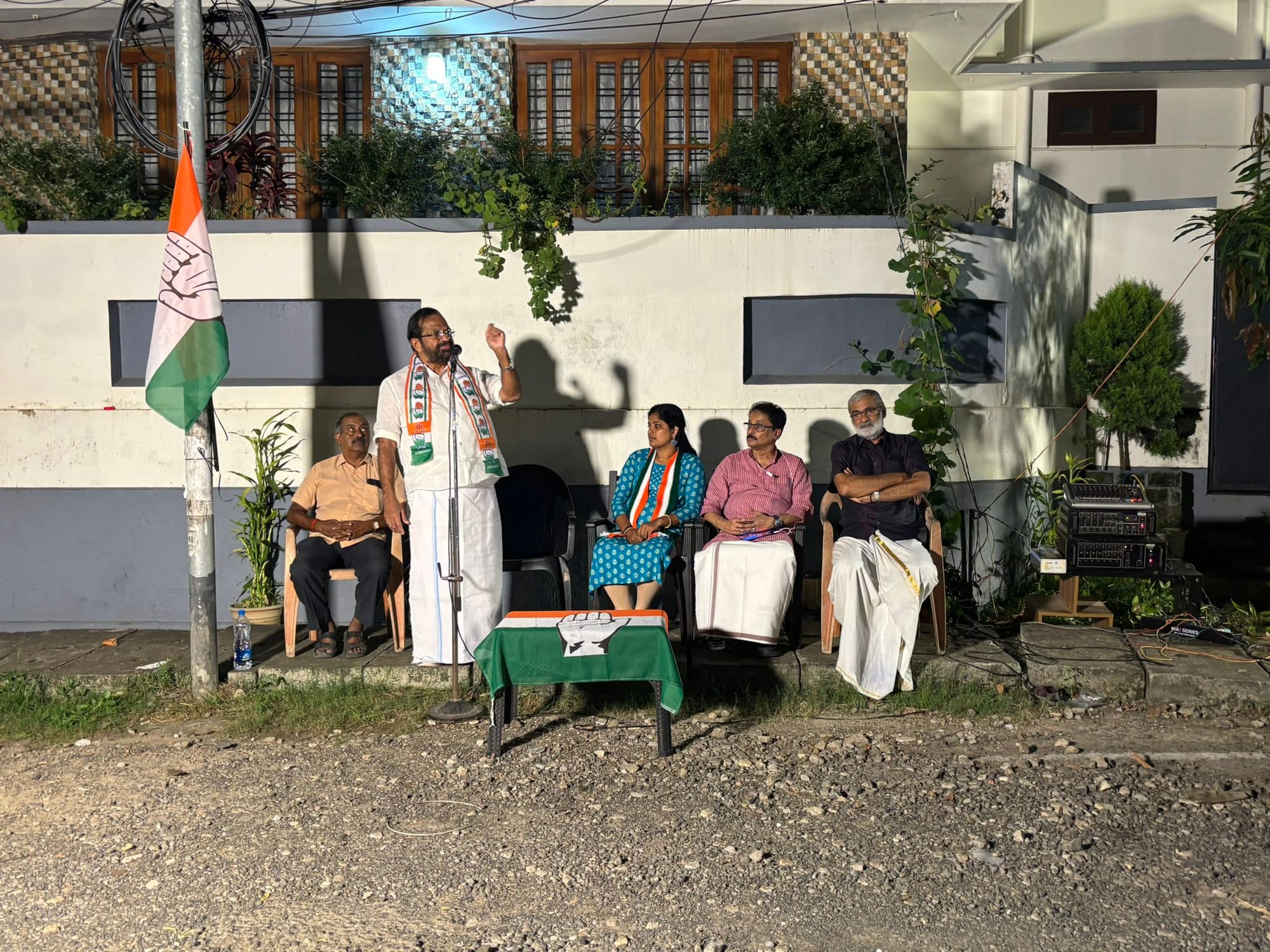
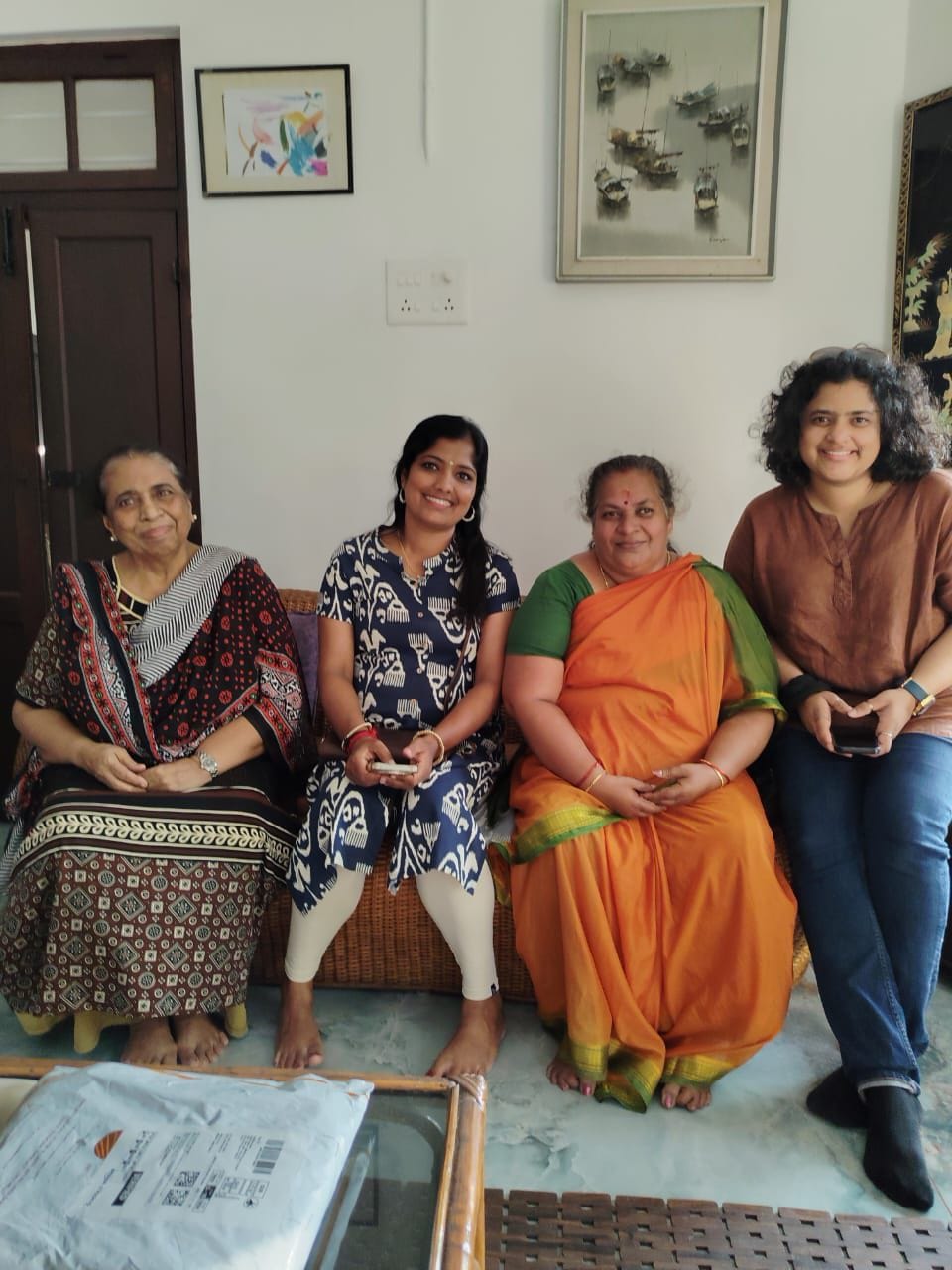
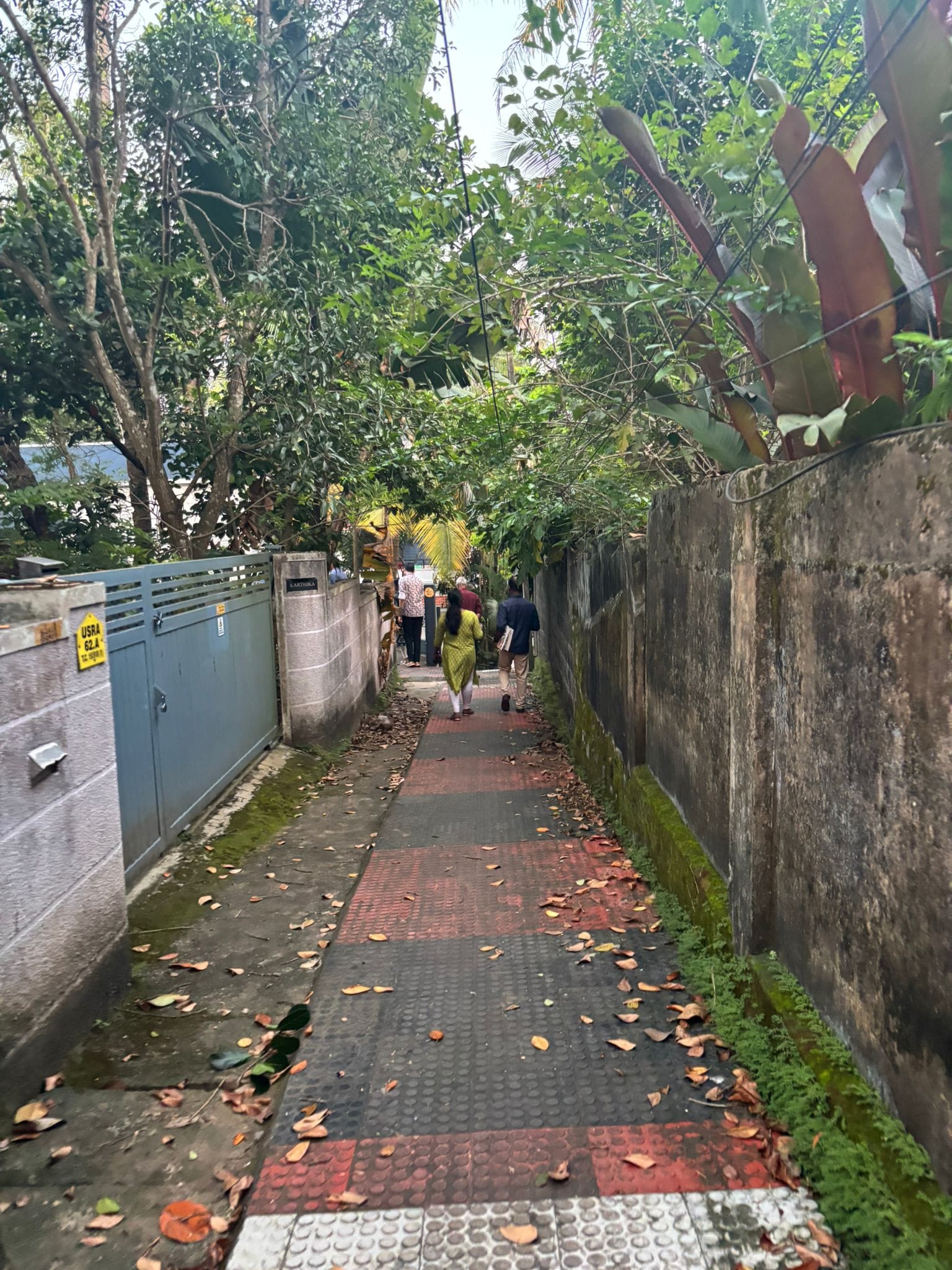
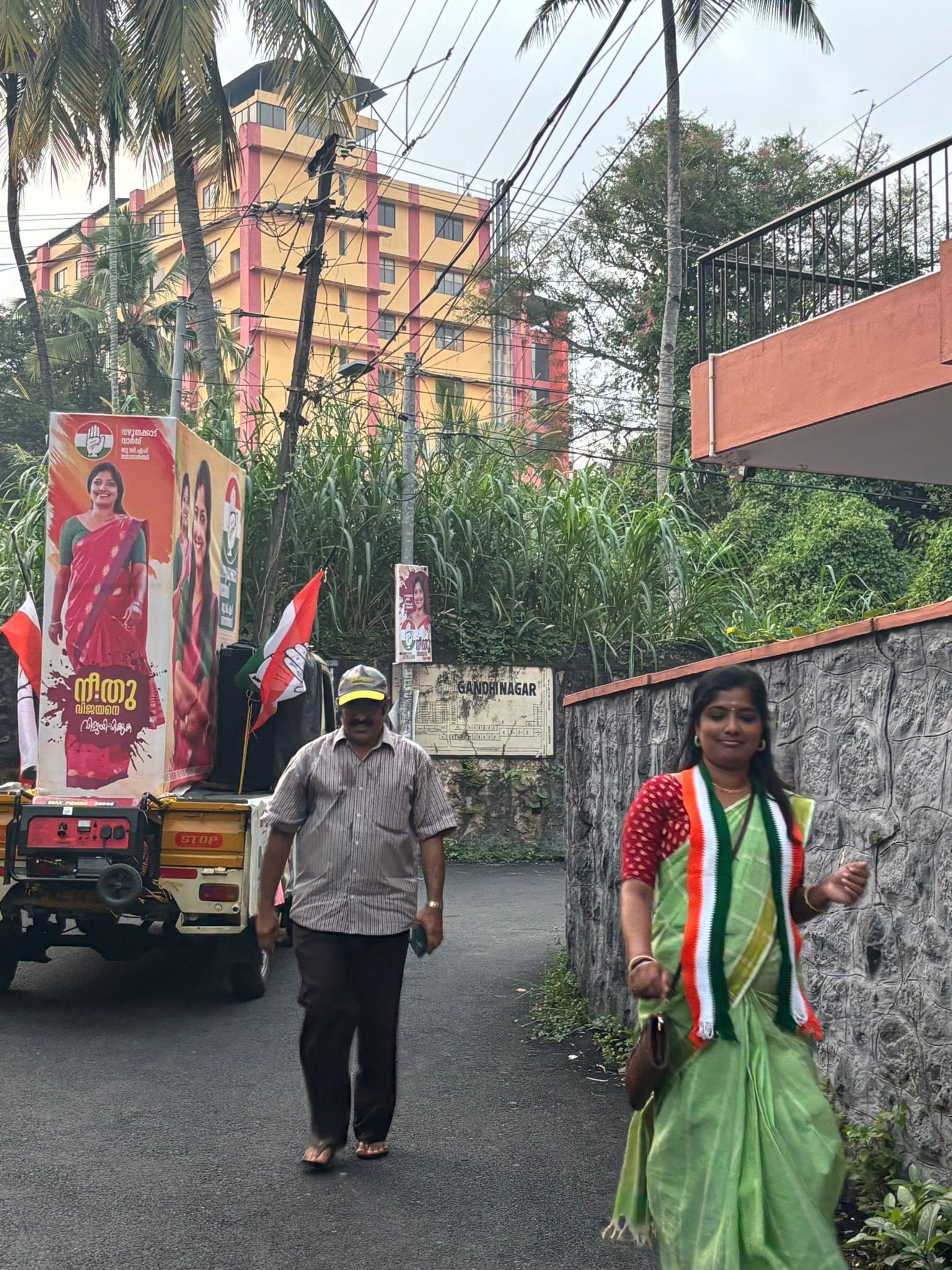
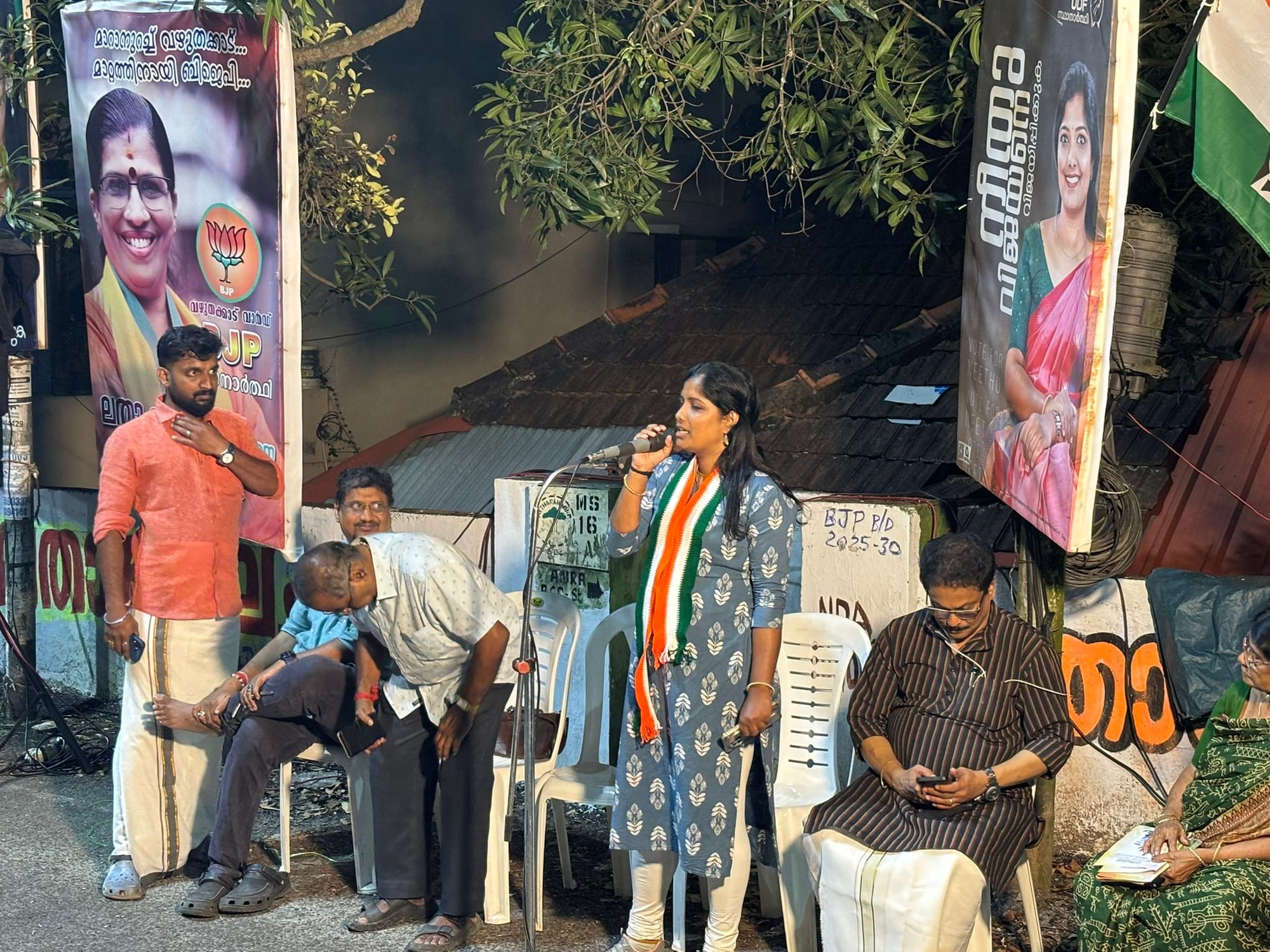
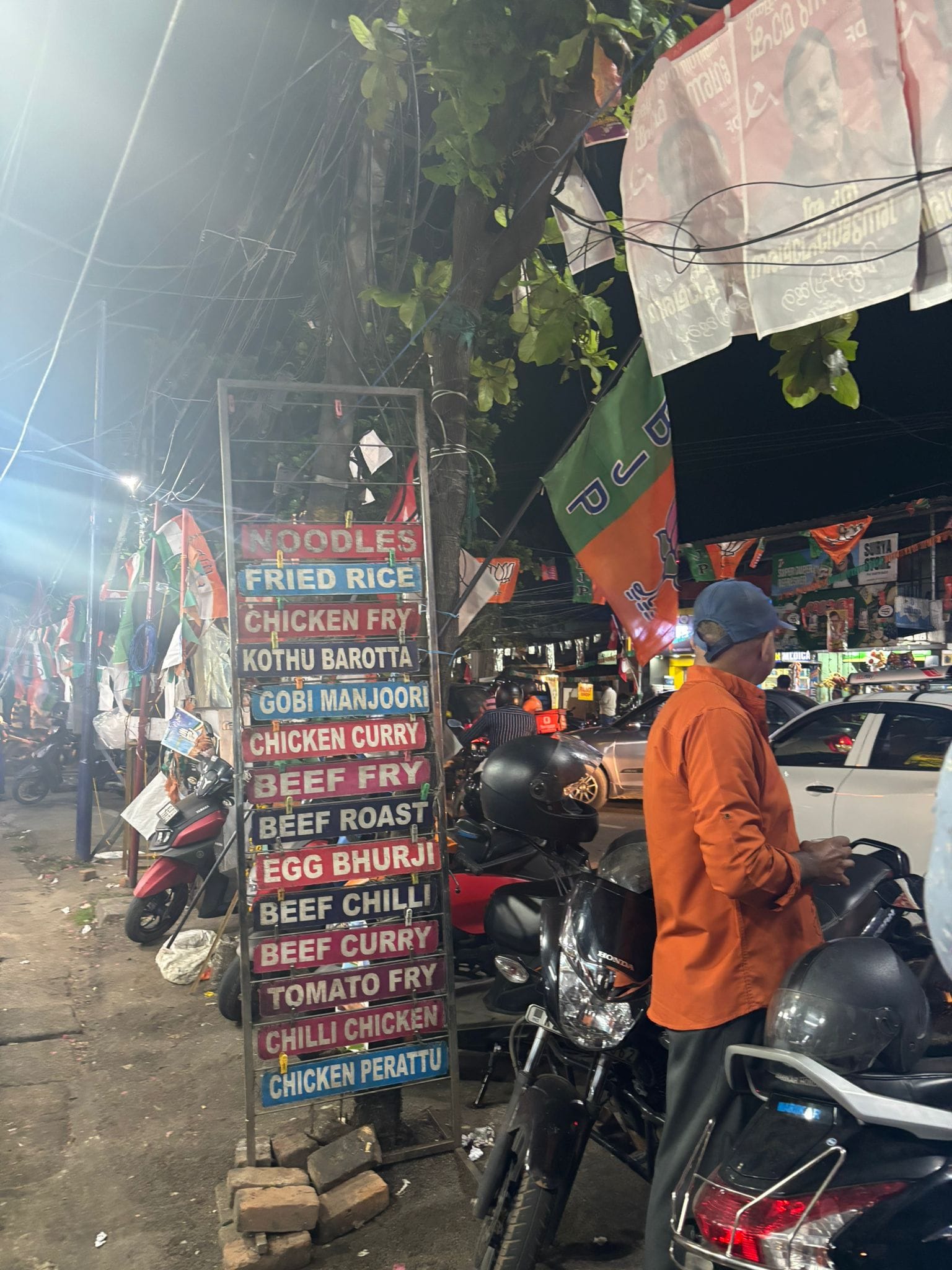
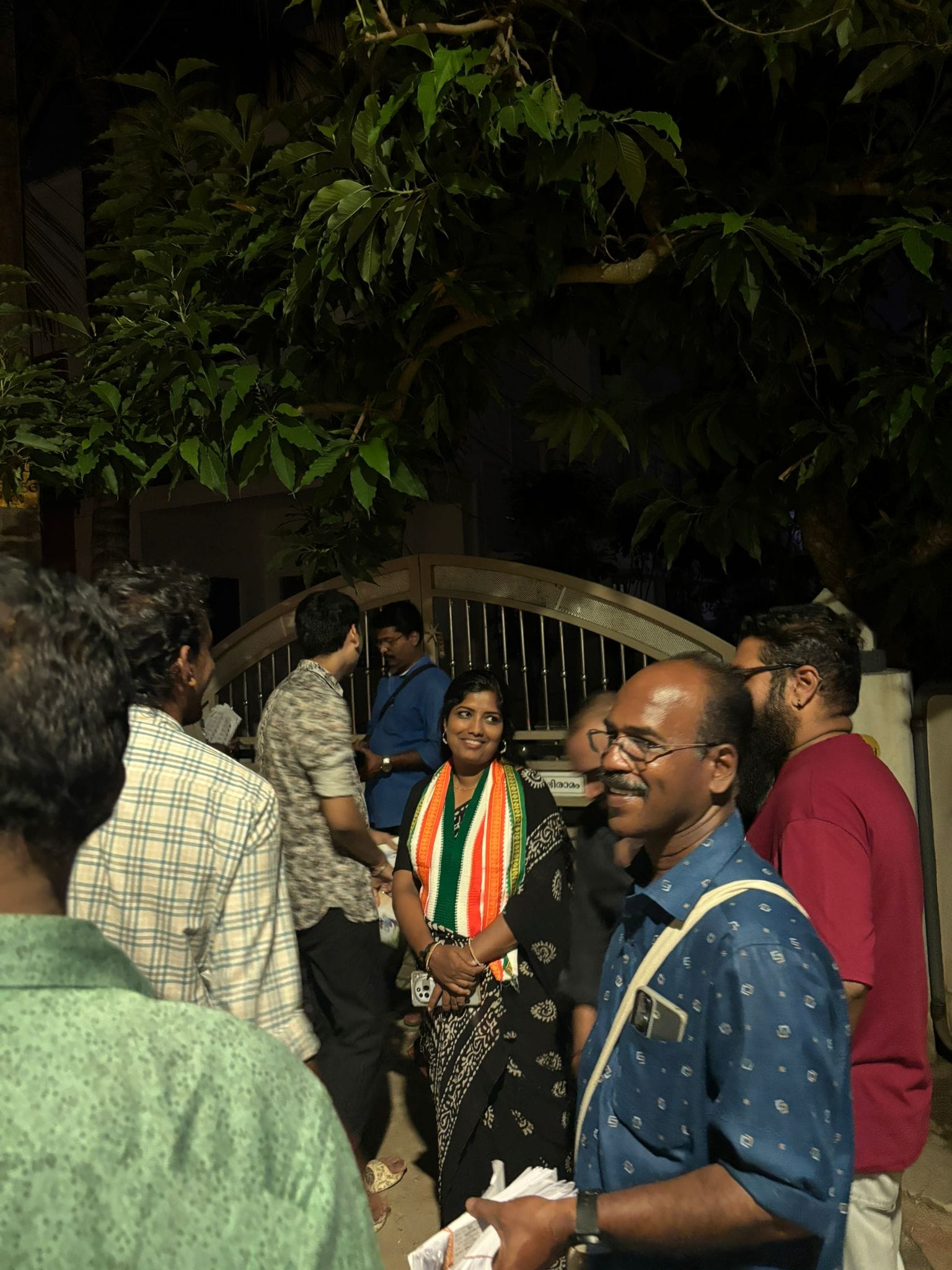
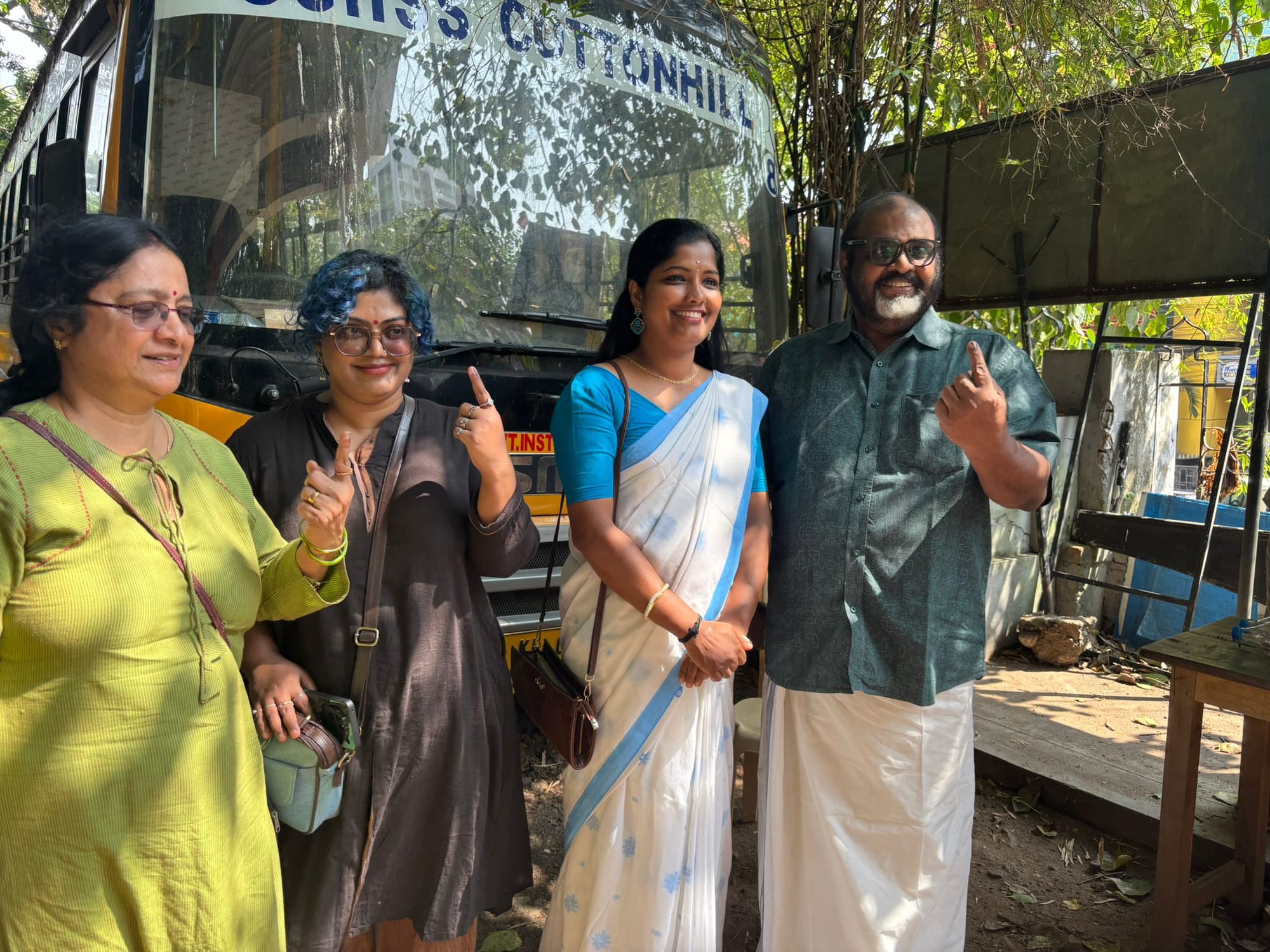
We campaigned well - supporting both Vazhuthacaud and Jagathy wards
I was supporting Neethu Vijayan of Vazhuthacaud. Personally, for me, it was such a joy to see young women leaders contest and come up! Grassroots governance is where democratic accountability is felt most deeply, and it is inspiring to witness this energy on the ground. I made friends. I must say, there was so much to learn from the door-to-door campaigns. We covered nearly 50-100 houses per day.
I used to come back home very tired, but then spending the rest of my night, for my parallel academic writing(s): I was spearheading the final steps of my second co-edited volume "Climate Futures Across Disciplines: A Next Generation Approach" (see here). I was able to submit the manuscript to Routledge on 5 December 2025. The slog continued, since I had to secure £10,000 for the Open Access. I thus, applied for the UK Research and Innovation grant, and our application was successful on 24th December.
As I was juggling these things, Dr. Tharoor used to kindly check on me; and ask how I was doing as I "immersed in the local expressions of democracy", we used to share updates of my understanding of the local political analysis. It was a valuable learning.
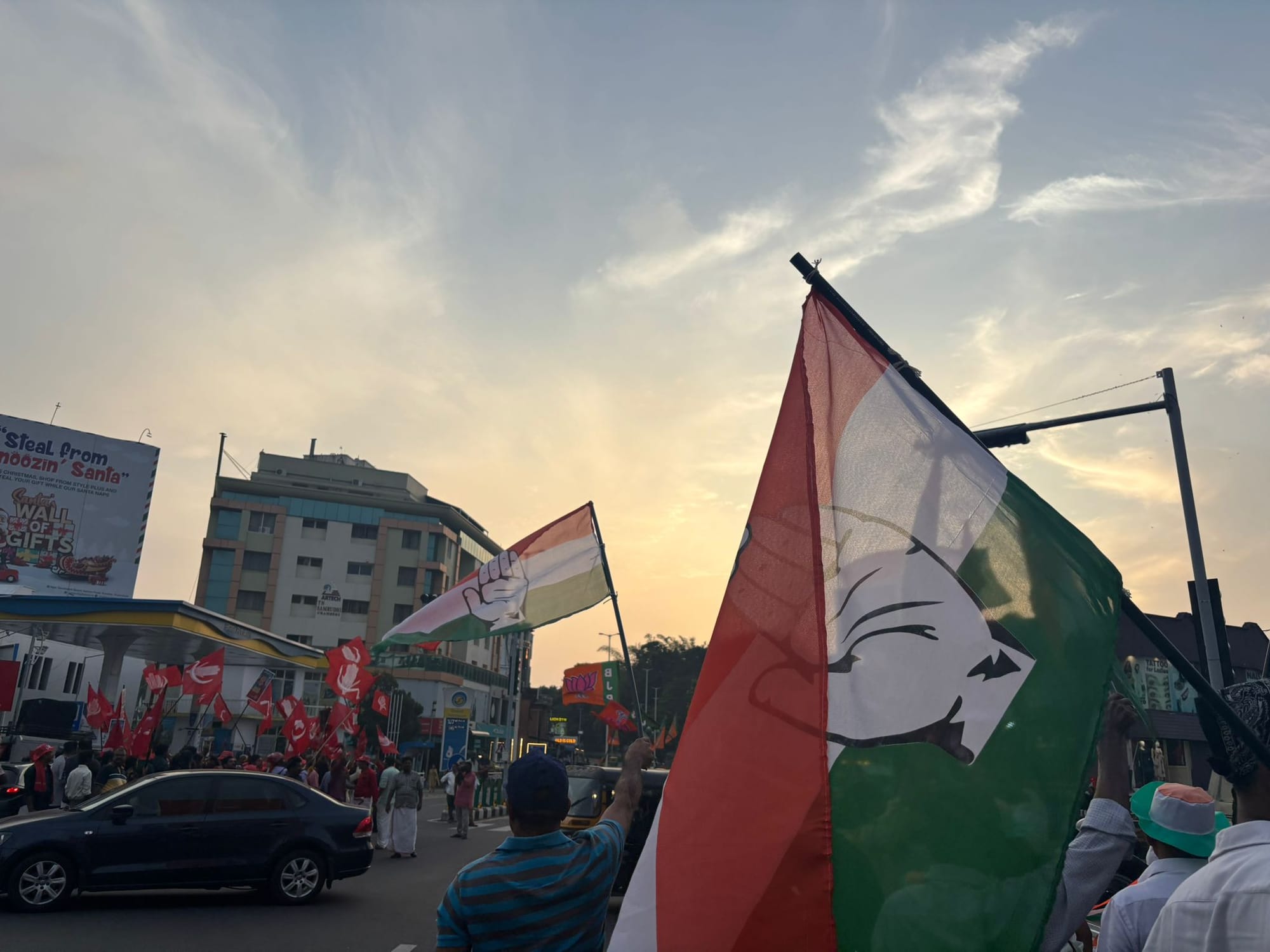
The final day of election campaigning (we call it "kottikalasam/കൊട്ടിക്കലാശം") when all three political parties i.e., UDF, LDF and BJP contested in one the busiest street of Thiruvananthapuram with dance, songs, hoisting flags and sound of traditional drums.
The road campaigning
Although the United Democratic Front (UDF) put up a worthy fight, the sad reality is that we lost in Vazhuthacaud. In Vazhuthacaud Left Democratic Front (LDF) came to power. And in the whole of Thiruvananthapuram, for the first time - National Democratic Alliance (NDA) came to power. Nevertheless, in December 2025 Kerala local body elections the UDF made a win for the whole of Kerala. This is promising.
There were notable trends one cannot overlook. Being in and out of the local political structure (as an observer, researcher, and at times touching the deepest veins of the society in my hometown to understand the pulse of local democracy), I've observed how our democracy is "alive and kicking"... I've observed it over and over again. Another notable trend is the way people frame things; for instance, the growing dichotomy in India regarding the interpretation of national identity. For example, this is reflected even in debates over the use of “India” versus “Bharat,” notwithstanding the constitutional clarification that “India, that is Bharat, shall be a Union of States.” In such an example itself, it can be noted how patriotism and nationalism both diverge and overlap in complex and shifting configurations. Of concern is a simultaneous presence of unwarranted certainty and conceptual ambiguity, often asserted as wisdom, amidst such notable divergence and overlaps. Yet another trend was that, at the same time, a segment of the youth is increasingly self-described as apolitical, even as such disengagement becomes politically mobilised. These patterns/trends warrant caution, sustained analysis, and a heightened emphasis on informed decision-making.
(to be continued...)
I have more to say, but I am only learning, so I'll rest my reflections as opinions and leave it at that.
For me, managing office workflows was never the challenge; aligning myself with the language of “real” politics was unique. I remain deeply grateful that neither Dr. Tharoor nor the office ever sugarcoated anything—they consistently made me aware of the realities.
In academia, we speak as observers; in politics, we operate through loyalties. In academia, or even in policy work, we maintain a polished demeanour; in politics, that polish must coexist with the courage to expose oneself to vulnerability. In academia, we speak and write in ways that nurture others; in politics, one must always wield a double-edged sword in every form of articulation, with wisdom and wit.
Academia offers pockets of safe spaces; in politics, you learn to steady yourself and run your own course. No one is an enemy, no one is a friend, no one can truly betray you, and no one can save you; at the same time, everyone is a friend, and everyone must be assessed with wisdom. This means misunderstandings are not personal, betrayals are not personal, and everyone is racing to climb the ladder. But what is that ladder? Does it lead to the sky, where there is no cloud or platform to hold you as gravity pulls you back? Do you call it a fall or a dive? And is there ever a safety net?
So the "real" in real politics is what we make of it.
I have much more to say, but maybe, in time...